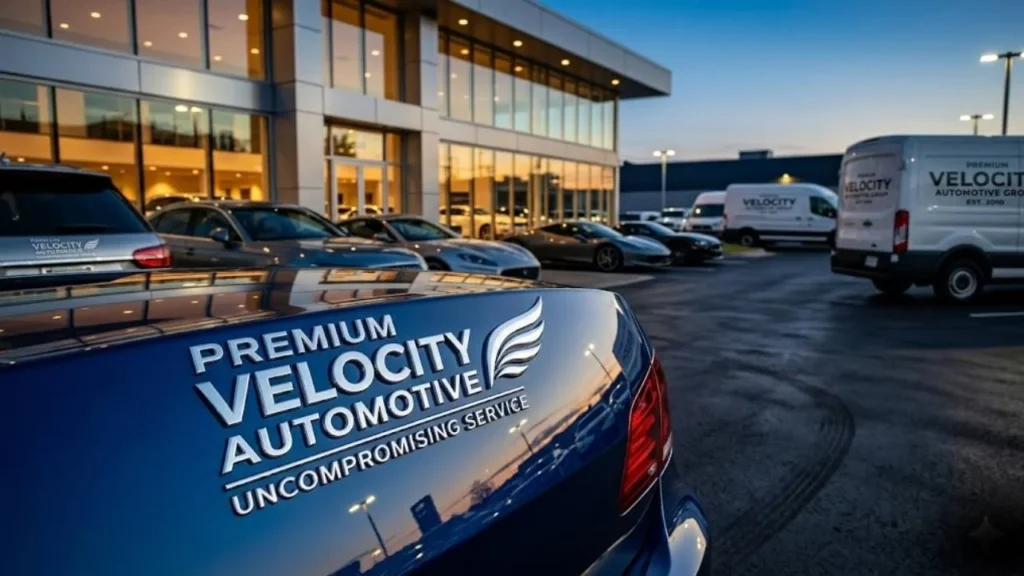
Custom emblems for car dealerships are branded nameplates, badges, or decals applied to vehicles to keep your dealership’s name in front of potential buyers long after the sale. For fleet vehicles, they serve double duty — reinforcing corporate identity across every van, truck, or service car in your fleet, turning each one into a rolling billboard that never stops working.
Whether you run a high-volume used car lot, a luxury franchise dealership, or a growing corporate fleet, the right automotive emblem strategy can deliver one of the highest returns on investment in your entire marketing budget. And yet, most dealerships and fleet managers treat emblems as an afterthought.
This guide changes that. We’ll walk you through everything — from materials and types, to placement, ordering minimums, installation, and ROI — so you can make an informed decision and turn every vehicle on the road into a brand asset.
What Are Custom Emblems for Car Dealerships?
At their most basic, custom emblems for car dealerships are branded identifiers placed on sold or fleet vehicles. But there’s a crucial distinction in the terminology that trips up a lot of buyers.
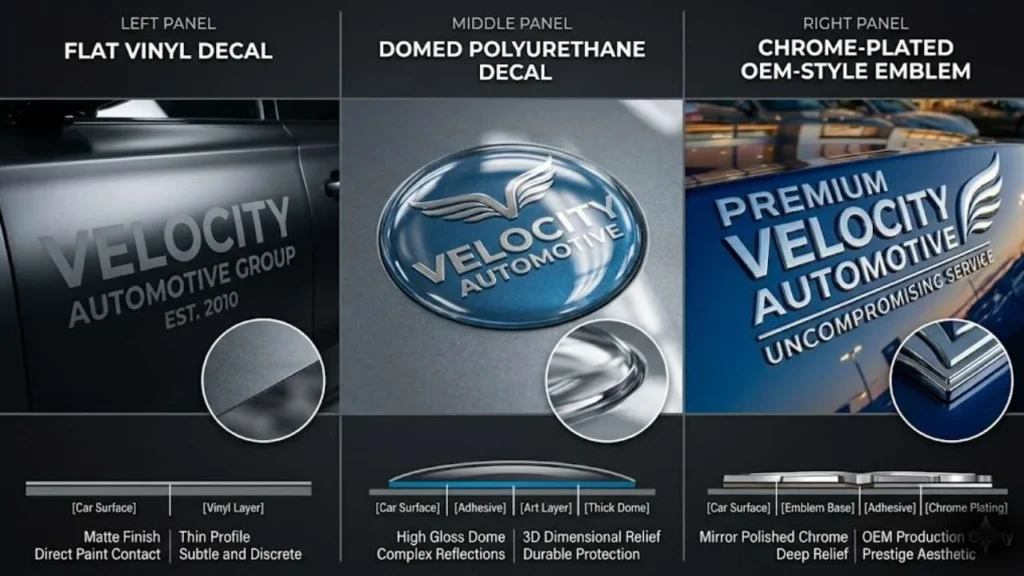
- Decals refer to flat, adhesive-backed stickers — typically vinyl film cut to shape
- Nameplates refer to three-dimensional, molded badges that mimic the OEM-style badges auto manufacturers apply at the factory
- Emblems is a broad term used for both, though it most commonly refers to the 3D molded variety
Think of it this way: a decal is what you’d find on a window at a used car lot. A nameplate is what you see on the trunk of a new BMW. Your custom dealer emblem can look and feel just like that factory badge — and that’s exactly the point.
Emblems vs. Decals vs. Nameplates — What’s the Difference?
| Type | Material | Durability | Cost Range | Best Use |
|---|---|---|---|---|
| Thermal Die-Cut Decal | 3-mil vinyl film | 3–5 years | $ | High-volume, budget lots |
| DomeCal / Dome Decal | Polyurethane-coated film | 4–6 years | $$ | Mid-tier branding |
| Molded Plastic Nameplate | ABS / Polystyrene | 5–7 years | $$ | Traditional OEM look |
| Chrome-Plated Emblem | ABS Plastic + Chrome | Vehicle lifetime | $$$ | Premium dealerships |
| Zinc Metal Nameplate | Zinc alloy | Vehicle lifetime | $$$$ | Luxury / high-end |
DomeCal and Stroke Dome options sit in a useful middle ground — they’re essentially printed decals coated with a thick polyurethane dome, giving them a 3D appearance and significantly better fade resistance than standard vinyl. Many dealers overlook these hybrid options entirely.
Why Dealerships Use Branded Emblems (Not Just Stickers)
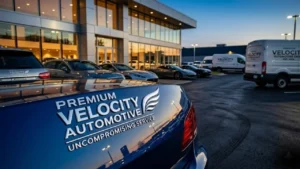
Every vehicle you sell becomes a mobile advertisement the moment it leaves your lot. A well-placed trunk lid badge gets seen at every traffic light, parking lot, and school pickup line in your local market — hundreds of times per day.
Your emblem also communicates brand consistency. When your nameplate matches the logo on your TV spots, billboards, and website, it reinforces brand recall across every touchpoint. That’s not a small thing in a market where buyers visit an average of just one or two dealerships before purchasing.
Fleet badging follows the same core principles as any custom emblem job, just at a much larger scale. Our complete guide to custom car emblems is a solid starting point for anyone new to the process before they dive into bulk ordering.
Types of Custom Car Emblems — A Complete Breakdown
Not all dealer nameplates are built the same. The right choice depends on your dealership tier, budget, vehicle type, and how long you expect the emblem to last. Here’s the most comprehensive breakdown available.
Chrome Emblems — The Premium Standard
Chrome-plated emblems are the gold standard for dealerships that want their branding to look and feel like it came from the factory. Built on an ABS plastic base and finished with a triple-chrome electroplating process, these emblems:
- Won’t fade, chip, rust, or tarnish over the lifetime of the vehicle
- Attach via automotive-grade foam adhesive tape — unaffected by car washes or extreme weather
- Are manufactured using the same injection molding and electroplating processes used by OEMs like Toyota and Mercedes-Benz
They’re the obvious choice for certified pre-owned programs, luxury franchises, and any dealership positioning itself as premium. The tradeoff is cost and minimum order quantities — typically 300+ units for full OEM-grade chrome plating.
Plastic Emblems — Budget-Friendly Without Sacrificing Brand
For high-volume lots, loaner vehicles, or used inventory, molded plastic nameplates deliver a professional, three-dimensional look at a fraction of the cost of chrome. Options include:
- Standard polystyrene with foil hot stamping in silver, gold, or chrome finishes
- Chrome-plated ABS for a more premium appearance at mid-range pricing
- Recessed background / raised text designs that create depth and visual interest
These are scratch-resistant, lightweight, and available with color fill to match your exact brand colors. For dealerships moving hundreds of vehicles per month, the per-unit cost is hard to argue with.
Metal vs. Plastic Emblems — Which Should You Choose?
This is the question most buyers wrestle with — and most content skips over. Here’s the honest answer:
Choose metal (zinc alloy or aluminum badge) when:
- Your brand is positioned in the luxury or near-luxury segment
- You want the emblem to last the full lifetime of the vehicle
- You need embossed, debossed, or engraved detailing that plastic can’t replicate cleanly
- You’re managing a premium corporate fleet where professionalism is non-negotiable
Choose plastic when:
- You’re badging high volumes of used vehicles or fleet vehicles on a tight budget
- Shorter vehicle cycles mean a 5-year lifespan is more than sufficient
- You need flexibility — plastic tooling is cheaper and faster to modify
The decision isn’t about corners — it’s about matching material quality to your brand positioning and operational reality.
Rebranding a fleet means removing a lot of old badges — and doing it consistently without paint damage across dozens of vehicles takes a system. Our guide on how to remove car emblems without damaging paint gives you a repeatable process that works every time.
Custom Emblems for Fleet Vehicles — A Different Beast Entirely
Fleet vehicle emblems serve a fundamentally different purpose than dealer after-sale badges. Instead of a one-time branding moment at point of sale, fleet emblems are active, ongoing brand ambassadors on working vehicles — every single day.
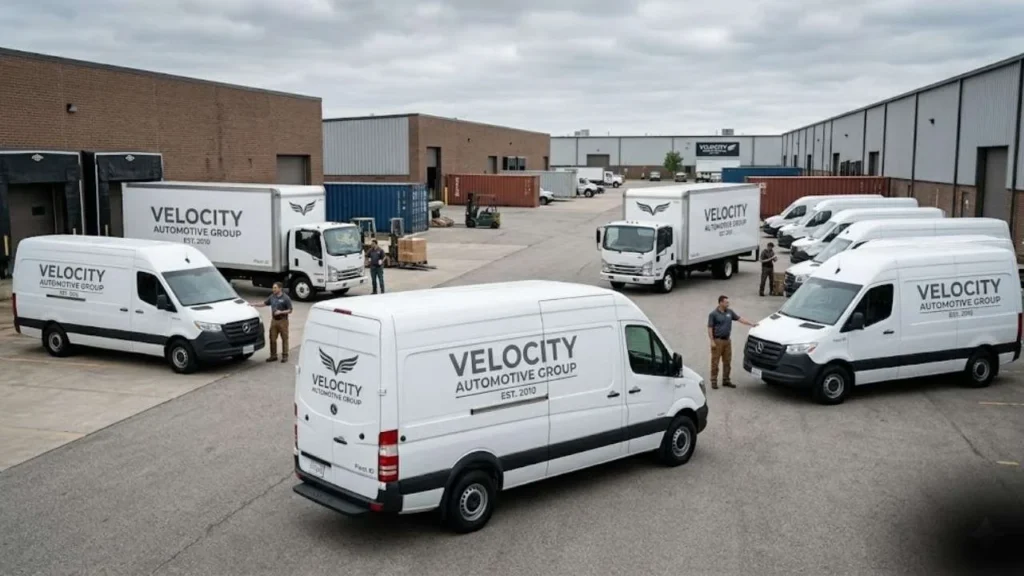
That means they need to survive:
- Commercial pressure washing — often weekly or more
- Road salt and extreme temperature swings
- Dock contact and minor physical impact on delivery vehicles
- Continuous UV exposure without fading or lifting
Why Fleet Branding with Emblems Outperforms Decals Alone
Vinyl decals are a great foundation for fleet branding. But pairing them with three-dimensional emblems elevates the result significantly. Here’s why that matters:
People naturally notice branded vehicles in motion more than static outdoor advertising — the combination of movement and a recognizable logo creates stronger brand recall. A chrome nameplate or molded vehicle badge adds a layer of perceived quality that flat decals simply can’t replicate.
Think about the difference between a service van with a printed decal versus one with a properly badged, OEM-style emblem on the door. One looks like an ad. The other looks like a professional organization.
For the strongest result, combine vinyl graphics (for coverage and color) with dimensional emblems (for quality signaling) in a layered branding system.
Fleet Emblem Use Cases by Industry
Competitors in this space almost exclusively discuss dealership use cases. But fleet emblems are equally valuable — and often more impactful — across multiple industries:
- Car rental companies — consistent branding across hundreds of rotating vehicles builds immediate recognition at airports and lots
- Corporate delivery fleets — every van reinforces the employer brand in neighborhoods where your customers live
- Government & municipal fleets — department identification badges serve both branding and compliance needs
- Rideshare & taxi operators — operator-level branding differentiates professional services from informal alternatives
- Utility & trade fleets — HVAC, plumbing, and electrical companies signal professionalism before a technician even knocks on the door
- Pharmaceutical & medical rep fleets — trust and credibility signaling is critical in regulated industries
Each of these use cases has different emblem requirements. A rideshare operator needs something subtle and removable. A municipal fleet needs weather-resistant, high-visibility badges. A luxury car rental needs chrome-level quality. Match the product to the use case.
Durability Requirements for Commercial Fleet Emblems
Commercial vehicle emblems are held to a higher standard than passenger car badges. Fleet programs need production runs executed against locked automotive specifications — that means consistent geometry, finish, and attachment method across every vehicle in the fleet.
For heavy commercial use, the minimum recommended specification is:
- Material: Chrome-plated ABS or zinc alloy — not standard polystyrene
- Adhesive: Automotive-grade foam adhesive tape with die-cut backing for full-surface contact
- Mechanical fasteners (pins or screws) for heavy trucks, box vans, or vehicles subject to high vibration
- UV-resistant and weather-resistant coatings as a baseline, not an upgrade
If you’re managing a fleet of 50+ vehicles, work with a supplier who can provide validated mounting methods and consistent surface treatments across the entire production run. Deviation in a fleet program creates visual inconsistency — and that undermines the entire branding investment.
Finish choice for a fleet isn’t just aesthetic — it affects how your brand reads across different vehicle colours and lighting conditions. Our chrome vs. black emblem comparison helps fleet managers make that call with real-world durability and visibility in mind.
The Business Case — ROI of Custom Dealer Emblems
Let’s talk numbers. Most dealership marketing discussions center on digital advertising, TV spots, and event sponsorships. Custom emblems rarely get their own line item in the marketing budget — and that’s a mistake.
A single branded vehicle can generate 30,000 to 70,000 daily impressions, depending on driving patterns and local density. At bulk pricing of $1.50–$6 per emblem, the cost-per-impression math is extraordinary:
$3 emblem ÷ 50,000 annual impressions = $0.00006 per impression
Compare that to digital advertising at $5–$15 per 1,000 views. There’s no contest.
Emblems as Post-Sale Marketing (The Long Game)
Every vehicle you sell and badge becomes a marketing asset that works for years — at zero recurring cost. Unlike social media, radio, or TV advertising that requires ongoing spend, an emblem placed today continues generating brand impressions without any additional budget.
This is the “long game” most dealerships underestimate. If you sell 200 vehicles per month and badge each one, you’re adding 200 new mobile billboards to your local market every single month. After a year, you have 2,400 vehicles actively advertising your dealership — for the price of less than a single month of digital ads.
Emblems vs. Other Dealership Advertising — Cost Comparison
| Ad Type | Avg. Cost | Duration | Est. Impressions | Cost per 1,000 Views |
|---|---|---|---|---|
| Custom Emblem | $3–6 | 5–10 years | 50,000+/year | ~$0.06 |
| Facebook/Meta Ad | $50–200/mo | Monthly | Variable | $5–15 |
| Billboard | $1,500–3,000/mo | Monthly | Fixed location | $2–5 |
| Radio Spot | $200–1,000/spot | One-time | Variable | $4–8 |
Note: Impression estimates are illustrative and vary by market and driving patterns.
The emblem wins on pure cost-per-impression. And unlike a billboard or radio spot, it travels — reaching your ideal buyers wherever they live, work, and shop in your local market.
How to Design the Perfect Custom Dealership Emblem
Design quality matters. A poorly designed emblem can look cheap — undermining the very professionalism it’s meant to signal. Here’s how to get it right.
Design Elements That Make Emblems Work
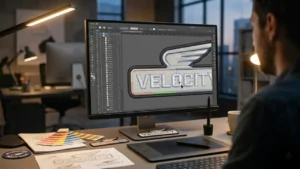
Logo integrity is the foundation. Your emblem shape should mirror your existing brand mark as closely as possible, maintaining the proportions and visual weight of your logo.
Beyond that, there are several key decisions:
- Finish: High-gloss chrome, brushed metal, matte, or domed — each sends a different quality signal
- Color fill: Standard foil hot stamping, full-color digital printing, or color-filled chrome for multi-color logos
- Shape: Die-cut to your logo’s exact outline for an OEM-style look, or standard shapes (oval, rectangle) for a cleaner, simpler badge
- Size: Trunk lid placements typically range from 3–5 inches wide; side door or fender placements can go larger
When in doubt, request a 3D digital proof before approving production. Several suppliers offer this at no additional cost, and it eliminates the risk of a costly misalignment between your logo and the finished emblem.
Matching Your Emblem to Your Dealership Tier
Not every dealer needs a zinc metal nameplate — and not every dealer should be using a plain vinyl sticker. Match the product to your positioning:
- Luxury & flagship stores: Zinc metal or chrome-plated ABS. The weight and finish signal premium quality before a customer even asks about the vehicle.
- Volume & mass-market lots: DomeCal or thermal die-cut decals deliver brand consistency at scale without breaking your supply budget.
- Used & independent dealers: Molded plastic nameplates offer a professional, OEM-style look that differentiates you from dealerships still using paper window stickers.
Your emblem should be cohesive with your broader dealership branding — matching the colors, fonts, and logo treatment used across your TV, print, and digital advertising.
Where to Place Emblems on Vehicles
Placement is arguably as important as the emblem itself. Here’s the tactical breakdown:
- Trunk/deck lid: The single most effective placement. Eye-level for drivers behind the vehicle, visible at every stop light, drive-through, and parking lot.
- Rear bumper area: Best for trucks and SUVs without a traditional deck lid — place near the license plate for maximum visibility.
- Side fenders or doors: Most useful for fleet vehicles and service cars that park curbside in neighborhoods.
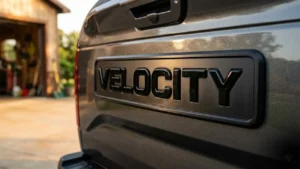
- Tailgate (trucks/vans): High-visibility for delivery and trade fleets; large surface area allows for bolder designs.
Pro tip: Pair your emblem with a branded license plate frame for a complete rear-of-vehicle branding suite. The combination of frame + nameplate creates a professional, finished look that customers notice.
One important don’t: avoid windshield placement. It obstructs driver sightlines and may violate local traffic codes.
If your fleet includes pickups or commercial trucks, badging placement and sizing work a little differently than on standard cars. Our custom truck emblems and tailgate badges guide covers everything specific to larger vehicles in a working fleet.
Ordering Custom Emblems — What to Expect
The ordering process is one of the biggest knowledge gaps for first-time buyers. Here’s a plain-language walkthrough.
Minimum Order Quantities Explained
MOQs vary significantly by emblem type and manufacturing process. Here’s a practical guide:
| Emblem Type | Typical MOQ | Notes |
|---|---|---|
| Vinyl die-cut decals | 25–50 units | Low barrier; great for testing designs |
| DomeCal / Dome decals | 50–100 units | Good entry point for smaller dealers |
| Molded plastic nameplates | 100–250 units | Mid-range commitment |
| Chrome ABS (OEM-grade) | 300+ units | Best per-unit economics |
| Zinc/metal nameplates | 250–500 units | Premium option; custom tooling required |
For smaller dealerships not ready to commit to 300+ units, dome decals or molded plastic options offer a professional result at accessible minimums. Some suppliers also offer no-minimum options for custom chrome emblems using alternative processes — useful for proofing or small specialty runs.
Turnaround Time & Production Timeline
Plan for the following typical timeline:
- Design submission & proof approval: 3–5 business days
- Production: 10–15 business days
- Shipping: 3–7 business days depending on location
Total: approximately 2–4 weeks from logo submission to delivery.
For fleet programs involving hundreds of vehicles, allow 4–8 weeks for the initial production run. Build in time for a small pilot batch first — validate fit, finish, and adhesion on one vehicle before committing to full fleet deployment.
Rush production is available from select suppliers. It’s worth asking about upfront, especially for new dealership openings or rebranding projects.
How to Submit Your Logo for Emblem Production
This step trips up more buyers than almost anything else. Follow these guidelines:
- Always provide vector artwork — AI, EPS, or SVG files. These are resolution-independent and allow the manufacturer to scale your logo to any size without quality loss.
- Avoid rasterized images (JPEG, PNG) — they may look fine on screen but produce blurry or pixelated results in physical production.
- Specify Pantone (PMS) color codes where possible for accurate color matching across chrome color fill, screen printing, or digital printing.
- Request a physical sample or 3D digital proof before approving the full production run.
Most reputable suppliers offer a free design review and will flag any issues with your artwork before production begins. Use that service.
Durability, Installation & Maintenance
This section alone separates professional buyers from novices — and yet almost no competitor content covers it. Here’s what you need to know to protect your investment.
How Long Do Custom Car Emblems Last?
| Emblem Type | Expected Lifespan | Key Durability Factor |
|---|---|---|
| Vinyl die-cut decal | 3–5 years | UV exposure and surface prep quality |
| DomeCal / polyurethane dome | 4–7 years | UV-stabilized coating extends life significantly |
| Molded plastic nameplate | 5–7 years | Quality of ABS substrate and adhesive |
| Chrome-plated ABS emblem | Vehicle lifetime | Triple-chrome electroplating resists all weather |
| Zinc alloy nameplate | Vehicle lifetime | Corrosion-resistant; unaffected by road salt |
The biggest variable across all emblem types is surface preparation at installation. An automotive-grade chrome emblem applied to a waxed, dirty, or wet surface will fail prematurely — regardless of how good the emblem itself is.
Step-by-Step: How to Apply a Dealer Emblem
Follow this process every time for a clean, lasting bond:
- Clean the surface thoroughly — remove all wax, dirt, grease, and road film with isopropyl alcohol or a dedicated surface prep solution
- Allow the surface to dry completely — optimal application temperature is between 65°F and 99°F (18°C–37°C)
- Test fit the emblem before removing the adhesive backing — confirm alignment visually
- Peel the backing liner to expose the pressure-sensitive adhesive — work slowly to avoid contamination
- Align carefully before pressing — repositioning is very limited once the foam adhesive tape contacts the paint surface
- Apply firm, even pressure across the entire emblem using a clean cloth or rubber roller
- Allow 24–48 hours cure time before the vehicle goes through a car wash
This process is worth training your lot staff on. A properly applied emblem looks premium. A poorly applied one — crooked, bubbled, or lifting at the edges — undermines your brand image.
Removing Emblems Without Damaging the Vehicle’s Paint
Customers sometimes request emblem removal — especially on premium vehicles where a clean, unbranded look is preferred. Here’s how to do it safely:
- Use a plastic trim pry tool or dental floss to work under the emblem edge — never use metal tools
- Apply gentle heat with a hair dryer or low-setting heat gun to soften the adhesive-backed foam tape
- Work slowly and evenly across the emblem, not just at one edge
- Remove residual adhesive with isopropyl alcohol or a dedicated adhesive remover — never abrasive compounds
- Inspect the paint surface — quality emblems should leave no permanent marks if removed correctly
High-quality nameplates are engineered to release cleanly. If you’re finding significant residue or paint lifting, the issue is usually adhesive quality — a good reason to source from reputable suppliers using automotive-grade materials rather than the cheapest option available.
Eco-Friendly & Sustainable Emblem Options
This is an emerging conversation in the dealership and fleet space — and it matters more than most procurement teams realize.
As ESG (Environmental, Social, and Governance) reporting becomes standard for corporate fleets, the materials in your branded products are increasingly scrutinized. The good news: more sustainable emblem options are now commercially available.
What to look for:
- Recyclable ABS substrates — reduces end-of-life waste versus standard mixed-material emblems
- Water-based adhesives — lower VOC emissions during manufacturing and application
- PVC-free vinyl film — increasingly available from major suppliers as an alternative to standard vinyl decals
- Low-VOC inks for screen-printed and digitally printed options
- ISO 14001-compliant manufacturers — the environmental management certification to ask suppliers about
- 3M Envision™ series materials — a commercially available, PVC-free vinyl option suitable for fleet graphics
For EV-focused dealerships and electric corporate fleets, this matters beyond compliance. Your branding materials are an extension of your sustainability narrative. An EV dealership using chrome emblems on recycled-material substrates and PVC-free vinyl communicates brand alignment at every touchpoint — including the ones you might not have considered.
Submitting clean artwork is non-negotiable when you’re ordering emblems for an entire fleet — one bad file means inconsistency across every vehicle. Make sure everything is dialled in by following our guide on how to create a vector logo for your custom emblem order before you send anything to production.
Frequently Asked Questions
Are custom emblems the same as dealer badges?
Can I remove a dealer emblem without damaging the paint?
What's the cheapest type of dealership emblem?
What's the minimum order quantity for custom car emblems?
Conclusion: Turn Every Vehicle Into a Brand Asset
Custom emblems for car dealerships are one of the most cost-effective, long-lasting branding investments available in the automotive space. At pennies per impression over years of active use, nothing in your marketing budget comes close.
The decision path is straightforward:
- Choose your material based on dealership tier and vehicle type — chrome or zinc for premium, plastic or dome decals for volume
- Design with intent — match your emblem to your existing brand identity, choose the right finish, and get a proof before committing
- Place strategically — trunk lid first, tailgate second, always paired with a branded license plate frame
- Order smart — know your MOQ thresholds, submit vector artwork, and plan your production timeline
For fleet operators, the calculus is even clearer. Every vehicle in your fleet is a moving billboard, driving through neighborhoods where your customers live and work — 365 days a year, at zero recurring cost.
Whether you’re ordering 50 vinyl decals for a small independent lot or 5,000 chrome nameplates for a national fleet program, the fundamentals are the same: quality materials, consistent design, correct placement, and proper installation.
Ready to get started? Request a sample from your emblem supplier, get a bulk pricing quote for your annual volume, and make your vehicles work harder for your brand — starting today.