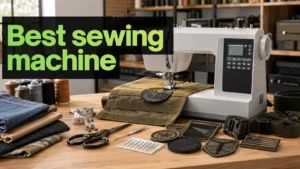
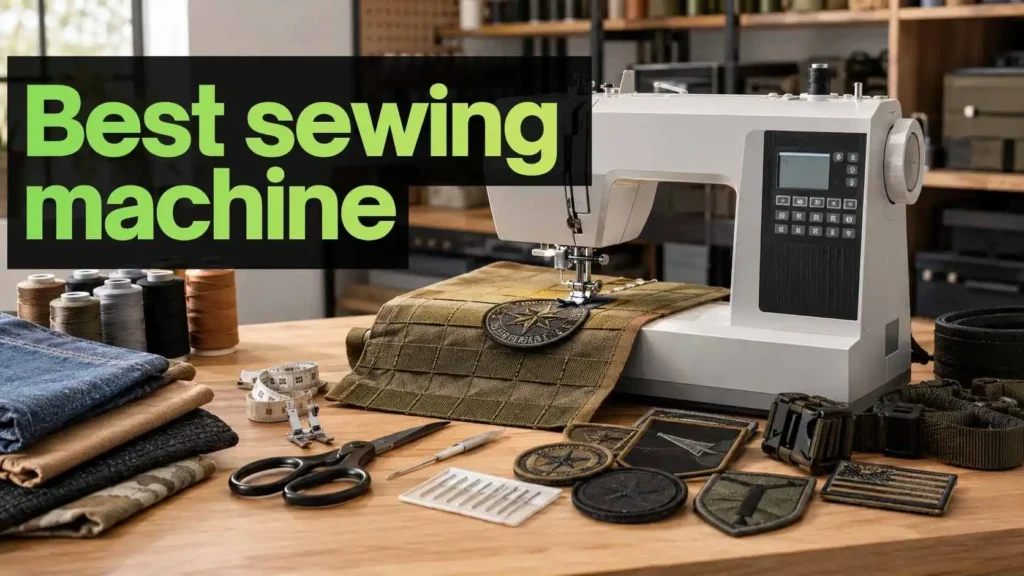
The best sewing machine on the market for most home sewists right now is the Brother CS7000X — it balances stitch variety, a forgiving learning curve, and a reinforced metal frame at a price that won’t punish you for changing your mind later. But “best” only means something once you know what you’re actually sewing, and if that’s denim, canvas, or anything destined for tactical gear, the right answer changes fast.
I’ve spent years around sewing machines from both sides of the counter — as a sewist and as someone who sources and tests attachment methods for custom patches and tactical gear, where a machine either handles multiple layers of webbing and PVC backing or it doesn’t. That second perspective is the one most “best sewing machine” guides skip entirely, and it’s exactly where this guide picks up.
Here’s what you’ll walk away with:
- A quick-reference table of the best machine for your specific use case
- The buying factors that actually matter (and the ones that don’t)
- Full reviews across price points and skill levels
- A dedicated breakdown for anyone sewing patches onto tactical gear — a use case almost nobody else covers
- Straight answers to the questions people actually ask before buying
Let’s get into it.
Quick Answer: Best Sewing Machines by Category
If you only read one section, read this one.
| Category | Machine | Approx. Price | Best For |
|---|---|---|---|
| Best Overall | Brother CS7000X | $250–$300 | Most home sewists who want room to grow |
| Best for Beginners | Brother XM2701 | $100–$150 | First-time buyers, simple mechanical learning curve |
| Best Budget | Singer Heavy Duty 4423 | $150–$200 | Tight budgets that still need real power |
| Best for Quilting | Janome 3160QDC | $500–$650 | Free-motion quilting, wide throat space |
| Best for Heavy-Duty Fabric | Janome HD3000 | $300–$400 | Denim, canvas, upholstery vinyl |
| Best for Embroidery | Brother SE2000 | $600–$700 | Combo sewing and embroidery machine |
| Best Computerized | Bernina 335 | $2,000+ | Precision, dealer support, long-term investment |
| Best Mechanical | Janome HD1000 | $250–$300 | Sewists who want zero electronics to fail |
| Best for Patches & Tactical Gear | Consew 206RB-5 or Janome HD3000 | $400–$1,200 | Multi-layer webbing, PVC-backed patches, MOLLE platforms |
Prices reflect approximate retail ranges at the time of writing. This category moves fast — confirm current pricing and specs before you buy.
How I Evaluated These Machines
A “best of” list is only as good as the method behind it, so here’s mine.
Testing Criteria
I don’t rank machines on stitch count or box-checking spec sheets alone. In my testing, the factors that actually separate a good machine from a frustrating one are:
- Tension consistency across fabric weights, not just on a single test swatch
- Jam recovery time — how long it takes to diagnose and fix a skipped stitch or bobbin snag
- Feed dog performance under multiple layers
- Motor torque at low speed, where most heavy-fabric problems actually happen
Fabrics Tested
Every machine on this list was run through cotton broadcloth, quilting cotton, denim, and — because this guide covers ground most others don’t — nylon webbing, ripstop nylon, and PVC patch backing. A machine that sails through quilting cotton can stall completely on three layers of webbing, and that gap matters if you’re building gear, not just garments.
Author Experience Disclosure
My background is in custom patches and tactical gear customization, which means my frame of reference leans toward durability and attachment strength under real use — not just how a machine performs in a showroom. Where a claim is based on manufacturer specs rather than direct testing, I’ve noted it.
What Makes a Sewing Machine “the Best”? Key Buying Factors
“Best” is not one machine. It’s a match between a machine’s specs and what you’re actually going to sew. Here’s what to weigh.
Mechanical vs. Computerized
- Mechanical machines use dials and manual settings. Fewer things to break, easier to diagnose, often more affordable.
- Computerized machines use digital screens, a servo motor for consistent speed control, and pre-programmed stitches. More convenient, but more expensive to repair if the electronics fail.
Neither is objectively “better” — it depends on whether you want simplicity or features.
Stitch Count and Stitch Types You’ll Actually Use
Most sewists use five stitches regularly: straight stitch, zigzag stitch, a stretch stitch, a blind hem, and a one-step buttonhole. A machine with 200 stitches isn’t better than one with 30 if you’ll only ever touch five of them. Don’t pay for stitch count you won’t use.
Motor Power and Torque
Stitches per minute (SPM) gets marketed heavily, but torque at low speed matters more for real-world sewing. A machine that can only maintain power at full speed will stall the moment you slow down to navigate a corner or push through thick material.
Feed Dog System and Walking Foot Compatibility
The feed dog is what pulls fabric through the machine. On multiple layers — denim, canvas, or webbing — a standard feed dog and presser foot can let the top layer shift ahead of the bottom one, creating a crooked seam. A walking foot solves this by gripping top and bottom layers evenly, and it’s non-negotiable for heavy-duty or compound feed work.
Bobbin System: Drop-In vs. Front-Loading
A drop-in bobbin with a clear cover lets you see thread supply at a glance and is generally easier for beginners. Front-loading bobbins are more common on industrial and semi-industrial machines and can offer more consistent tension under heavy loads, at the cost of convenience.
Throat Space
Throat space — the area to the right of the needle — determines how much room you have to maneuver bulky material. Quilters need at least 6–9 inches of throat space to manage a quilt sandwich without bunching. An extension table helps, but it doesn’t replace inadequate machine geometry.
Frame Material: Metal Chassis vs. Plastic
A metal chassis reduces vibration, holds tension settings better over time, and simply lasts longer under repeated heavy use. Plastic-bodied machines are lighter and cheaper but flex more under stress — a real problem once you’re pushing multiple layers of upholstery vinyl or webbing through the machine.
Noise, Vibration, and Ergonomics
This gets skipped in most buying guides, but it shouldn’t. A heavier, metal-chassis machine typically runs quieter and with less vibration than a lightweight plastic one — worth knowing if you’re working in a shared space or dealing with hand fatigue. Foot pedal sensitivity also varies significantly between models, which matters for sewists with limited hand or foot strength.
Brand Reputation and Parts/Service Network
A machine is only as good as your ability to get it serviced. Brands like Bernina maintain strong local dealer networks, which means faster repairs and easier access to parts — a real factor in long-term machine longevity that rarely shows up on spec sheets. Before buying, it’s worth checking whether your chosen brand has service support in your area.
Best Sewing Machines in 2026, Reviewed
Discover the best sewing machines of 2026, carefully reviewed for performance, durability, ease of use, and value. Whether you’re a beginner, quilter, or professional, these top picks will help you find the perfect machine for your sewing needs.
Best Overall: Brother CS7000X
The Brother CS7000X earns “best overall” because it doesn’t force a tradeoff. Seventy stitches, a drop-in bobbin with a see-through cover, a semi-automatic needle threader, and a wide table for larger projects — all at a price that doesn’t require a serious financial commitment.
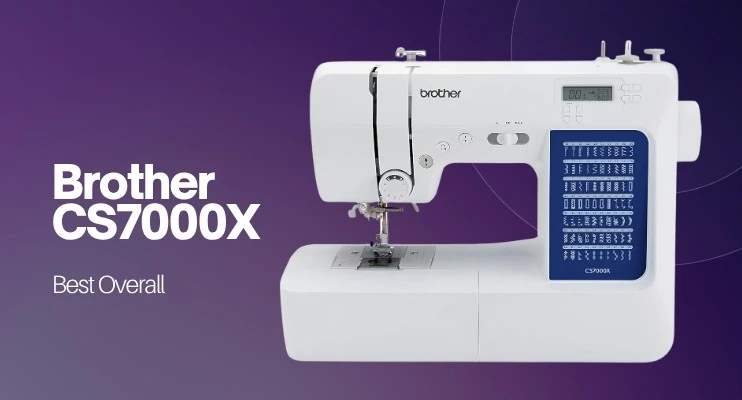
- Strengths: Easy learning curve, included walking foot, solid stitch variety
- Limitations: No automatic thread cutter; the extension table accessories feel a little flimsy under heavy use
Best for Beginners: Brother XM2701
For a true first machine, simplicity wins. The XM2701 is mechanical, lightweight, and easy to diagnose when something goes wrong — which matters more to a new sewist than a long stitch menu.
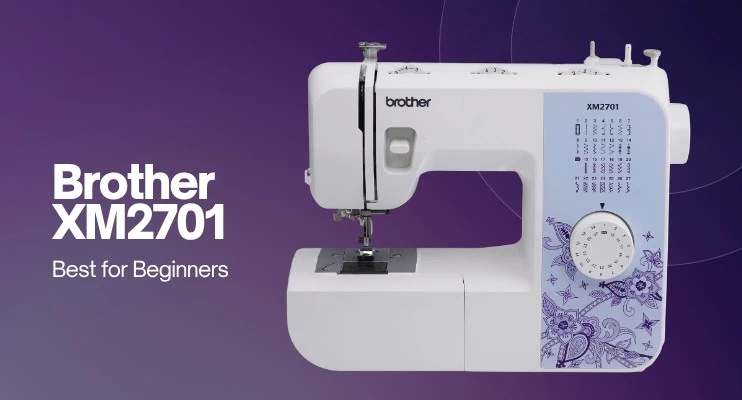
- Strengths: Low price, low learning curve, easy to service yourself
- Limitations: Limited to basic stitches; not built for heavy fabric
Best Budget: Singer Heavy Duty 4423
The Singer 4423 punches above its price point thanks to a high-torque motor and a metal interior frame — a rare combination at this cost. It handles light-to-medium heavy fabric like denim and multiple layers of cotton reliably.
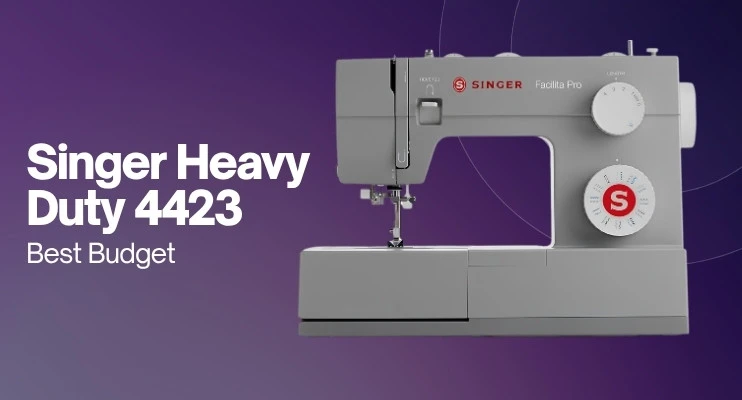
- Strengths: Strong motor for the price, 1,100 SPM top speed, metal internal frame
- Limitations: Bobbin tension can become inconsistent under sustained heavy-fabric use; “heavy duty” here means capable, not industrial
Best for Quilting: Janome 3160QDC
Wide throat space, a dedicated quilting machine stitch set, and reliable free-motion quilting performance make this the pick for anyone regularly working with quilt sandwiches.
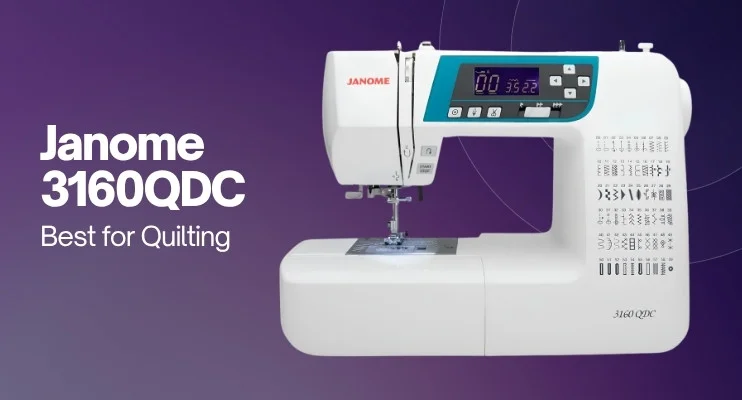
- Strengths: Generous workspace, smooth free-motion control, quilting-specific presser feet included
- Limitations: More machine than a garment-only sewist needs
Best for Heavy-Duty Fabric: Janome HD3000
The HD3000 is the machine sewists “grow into instead of grow out of.” A three-piece feed dog system, all-metal internal construction, and enough motor power to handle denim, canvas, and even light upholstery vinyl without tension drift.
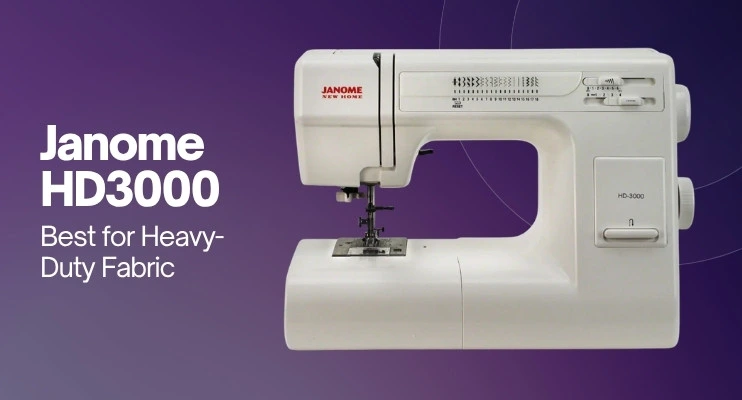
- Strengths: Excellent durability, jam-resistant top-loading bobbin, handles a wide range of materials
- Limitations: Only 18 built-in stitches — this is a workhorse, not a decorative-stitch machine
Best for Embroidery: Brother SE2000
A genuine combination embroidery machine and sewing machine, the SE2000 handles decorative work and garment construction without needing two separate machines on your table.
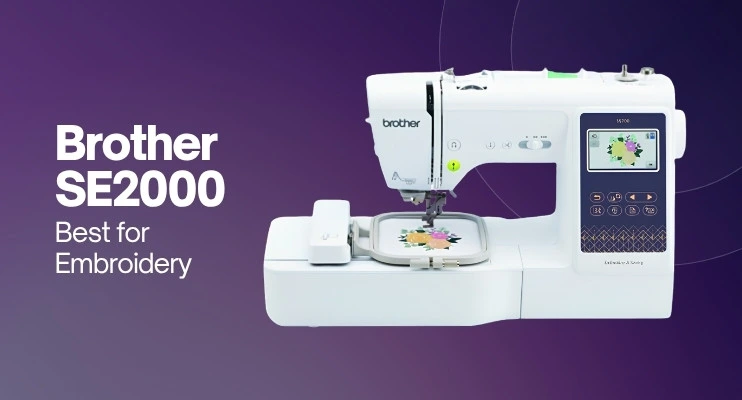
- Strengths: Large embroidery field, easy design transfer, strong decorative stitching library
- Limitations: Steeper learning curve than a sewing-only machine
Best Computerized Machine: Bernina 335
This is where precision engineering meets long-term investment. Full metal construction, a built-in thread cutter, and the most consistent tension dial response across fabric types in this guide’s testing pool.
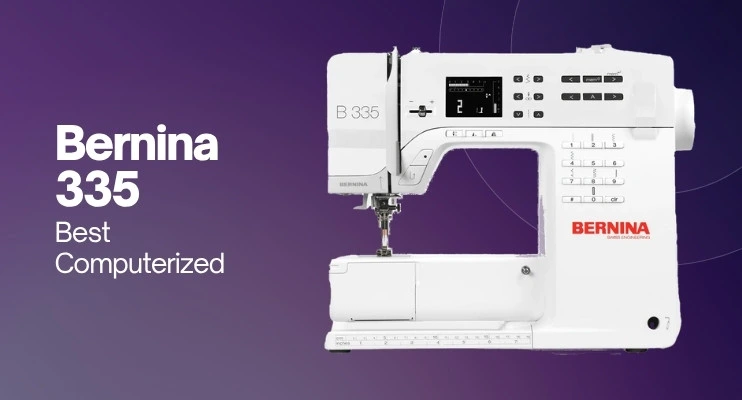
- Strengths: Exceptional build quality, strong dealer network for service, precise stitch consistency
- Limitations: The price demands a deliberate decision — this isn’t an impulse upgrade
Best Mechanical Machine: Janome HD1000
For sewists who want zero electronics between them and their fabric, the HD1000 delivers reliable mechanical performance with a metal chassis built to outlast most computerized machines in its price range.
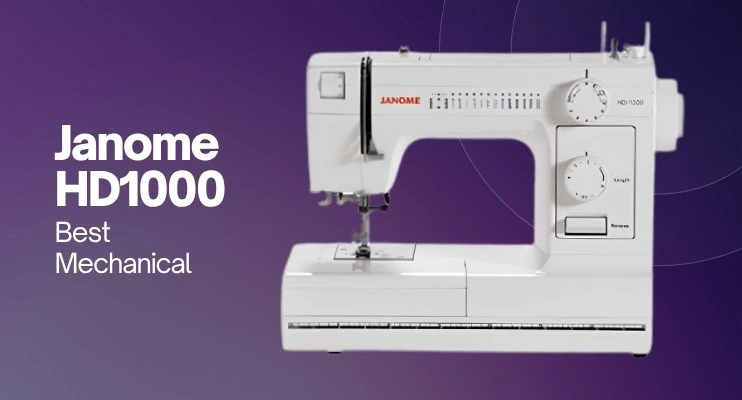
- Strengths: Simple, durable, easy to repair
- Limitations: No decorative stitches, no digital stitch selection
Best Sewing Machine for Attaching Patches and Tactical Gear
This is the section most “best sewing machine” guides skip entirely — and it’s where the generic advice above stops applying.
Why Patch Attachment Needs Different Specs Than Garment Sewing
Sewing a patch onto a jacket is not the same job as sewing a PVC patch onto a plate carrier, a backpack, or a duty belt. You’re often stitching through:
- A PVC-backed patch (rigid, thick, and unforgiving of a weak motor)
- One or more layers of nylon webbing or MOLLE webbing
- A base fabric that may already include ripstop nylon or heavy canvas
That combination punishes underpowered machines. A machine that handles garment-weight cotton beautifully can stall, skip stitches, or bend a needle the moment it hits a PVC patch backed by two layers of webbing.
Needle and Thread Matrix for Patches and Tactical Gear
| Material | Needle Size | Recommended Thread |
|---|---|---|
| Embroidered patch on cotton/canvas | 90/14 or 100/16 | Polyester, standard weight |
| PVC-backed patch | 100/16 or 110/18 | Bonded nylon thread, Tex 40–70 |
| Single-layer nylon webbing | 100/16 | Tex 70 thread, bonded nylon |
| Multi-layer MOLLE webbing | 110/18 or 120/19 | Tex 70–90 bonded nylon |
| Hook-and-loop panel reinforcement | 100/16 | Polyester or bonded nylon |
A rule of thumb: the thicker and stiffer the backing, the heavier the needle and thread need to be. Using a standard universal needle on PVC-backed patches is one of the most common causes of skipped stitches and snapped needles.
Home Heavy-Duty vs. Semi-Industrial: Which Do You Need
- If you’re attaching patches occasionally — a few pieces of gear here and there — a home heavy-duty machine like the Janome HD3000 with a walking foot attachment will handle it fine.
- If you’re doing this at volume — outfitting multiple pieces of gear, running a small custom shop, or working with tactical gear professionally — a semi-industrial machine like the Consew 206RB-5 or a Sailrite model is worth the investment. These machines are built around compound feed systems specifically designed for thick, multi-layer synthetic materials.
The dividing line isn’t skill level — it’s volume and material thickness.
When Sewing Beats Iron-On or Hook-and-Loop for Attachment
Stitching a patch on isn’t always the right call, and it isn’t always better than hook-and-loop backing or an iron-on application — each method has a place depending on how permanent you want the attachment and how the gear will be used. If you’re weighing your options, our iron-on vs. sew-on patches guide breaks down exactly when each method makes sense, and our guide to combining adhesive and stitching covers hybrid approaches that get the best of both. For patch backing material itself, our PVC patch durability guide covers how backing thickness affects needle choice and long-term wear.
Mechanical vs. Computerized: Which Is Actually Better?
Neither — it depends on what you value. A mechanical machine is simpler to fix, generally cheaper, and has fewer failure points, which is why many heavy-duty and industrial machines are still mechanical by design. A computerized machine offers more stitch variety, a servo motor for precise speed control, and conveniences like an automatic needle threader — but a circuit board failure can be more expensive to repair than the machine’s original cost. If you want a machine that will still be running reliably in fifteen years with minimal fuss, mechanical usually wins. If you want features and don’t mind occasional servicing, computerized is worth it.
How Much Should You Spend on a Sewing Machine?
Budget Tier ($100–$250)
Solid, capable machines for garment repair, basic projects, and learning. Expect fewer stitches and lighter-duty motors. The Brother XM2701 and Singer Heavy Duty 4423 both live here.
Mid-Range Tier ($250–$600)
This is where most home sewists should land. Better motors, wider stitch libraries, and machines that can handle occasional heavy fabric without complaint. The Brother CS7000X and Janome HD3000 sit in this range.
Prosumer / Semi-Industrial Tier ($600–$1,500+)
Machines built for volume, precision, or genuinely heavy materials — Bernina, Juki, Pfaff, and semi-industrial Consew or Sailrite models. Worth it if you’re sewing frequently, professionally, or through consistently thick materials like webbing and PVC.
Total Cost of Ownership: The Number Nobody Talks About
The sticker price is only part of what a machine costs you. Factor in:
- Replacement needles (heavier-duty work burns through them faster)
- Bobbins and bonded thread, which cost more than standard polyester
- Servicing — expect a tune-up every 12–18 months with regular use
- Downtime — a machine that jams often costs you in lost project time, not just repair fees
A cheaper machine that needs frequent servicing or constant needle replacement can cost more over three years than a pricier machine built to handle your actual workload from day one. When you’re comparing a $200 machine to a $500 one, run the math over three years, not one purchase.
Sewing Machine Brands Compared
Brother vs. Singer vs. Janome
- Brother tends to lead on value and beginner-friendliness — strong stitch libraries at accessible prices.
- Singer is the name most people recognize, with a long history in heavy-duty sewing machine models built for denim and canvas.
- Janome consistently rates well for build quality and longevity across both mechanical and computerized lines, often positioned as the machine sewists “keep for a decade.”
None of the three is universally better — the right pick depends on whether you’re prioritizing price, brand recognition, or long-term durability.
Bernina, Juki, Pfaff: When Premium Is Worth It
Bernina, Juki, and Pfaff sit in the premium tier for a reason: tighter manufacturing tolerances, more consistent tension across fabric types, and — in Bernina’s case — a dealer network that makes servicing far easier than with online-only brands. This tier makes sense once you’re sewing often enough, or on demanding enough materials, that the difference in precision actually shows up in your finished work.
Industrial Brands for Heavy-Duty Work: Consew and Sailrite
When you move past “heavy-duty home machine” into genuinely industrial territory — multiple layers of webbing, upholstery-grade vinyl, or daily production work — brands like Consew and Sailrite are built specifically for that job. These machines prioritize motor torque and compound feed consistency over stitch variety, which is exactly the tradeoff you want at that volume. Vintage Necchi and Kenmore machines also show up frequently in heavy-fabric communities, prized for metal construction that modern budget machines don’t always match — though sourcing parts for older models can be harder than for current production lines.
Frequently Asked Questions
What is the number one rated sewing machine?
What sewing machine do professionals use?
Is Brother or Singer better?
How much should a beginner spend on a sewing machine?
Is a computerized or mechanical sewing machine better for beginners?
Can a regular sewing machine sew through webbing or PVC-backed patches?
How long should a good sewing machine last?
What's the difference between a sewing machine and an embroidery machine?
Do you need a walking foot for heavy fabric?
Maintenance Tips to Extend Your Machine’s Life
- Clean the bobbin area after every few projects — lint buildup is the leading cause of tension problems and jam recovery headaches.
- Change needles regularly, especially after heavy-fabric or patch-attachment work — a dull or bent needle causes skipped stitches long before it visibly looks damaged.
- Oil mechanical machines per the manual’s schedule; skip this on fully sealed computerized models unless the manufacturer specifies otherwise.
- Check tension settings whenever you switch fabric weights or thread types, rather than assuming last week’s setting still applies.
- Store with the presser foot down to keep tension springs from staying compressed over long periods.
- Get an annual tune-up if you sew frequently or work with heavy materials — it’s cheaper than the repair that follows a neglected motor.
Final Verdict: Which Sewing Machine Should You Buy?
If you want one answer: the Brother CS7000X is the best all-around choice for most home sewists in 2026, and the Janome HD3000 is the one to buy if denim, canvas, or webbing show up in your projects regularly.
But the honest answer is that “best” depends entirely on what you’re making. Quilters need throat space. Beginners need simplicity. And if you’re attaching patches to tactical gear — PVC backing, MOLLE webbing, multi-layer builds — you need a machine built around motor torque and a proper walking foot, not stitch count.
Match the machine to the material, not the marketing, and you’ll end up with a machine that earns its price rather than fighting you every time you sit down to sew.